The agreement value is not the whole cost of a new flat. On top of it, a buyer in Pune pays stamp duty, a registration fee and, on a flat that is still being built, GST. Together they can add more than a tenth to what you pay. Here is what each one is as of November 2026, with the source for every rate. Where we could not confirm something from an official source, we say so.
The figures below were checked on 5 November 2026. Rates change, so confirm them with your lawyer or at the sub-registrar’s office before you budget.
Stamp duty: 7%, or 6% for a woman buyer
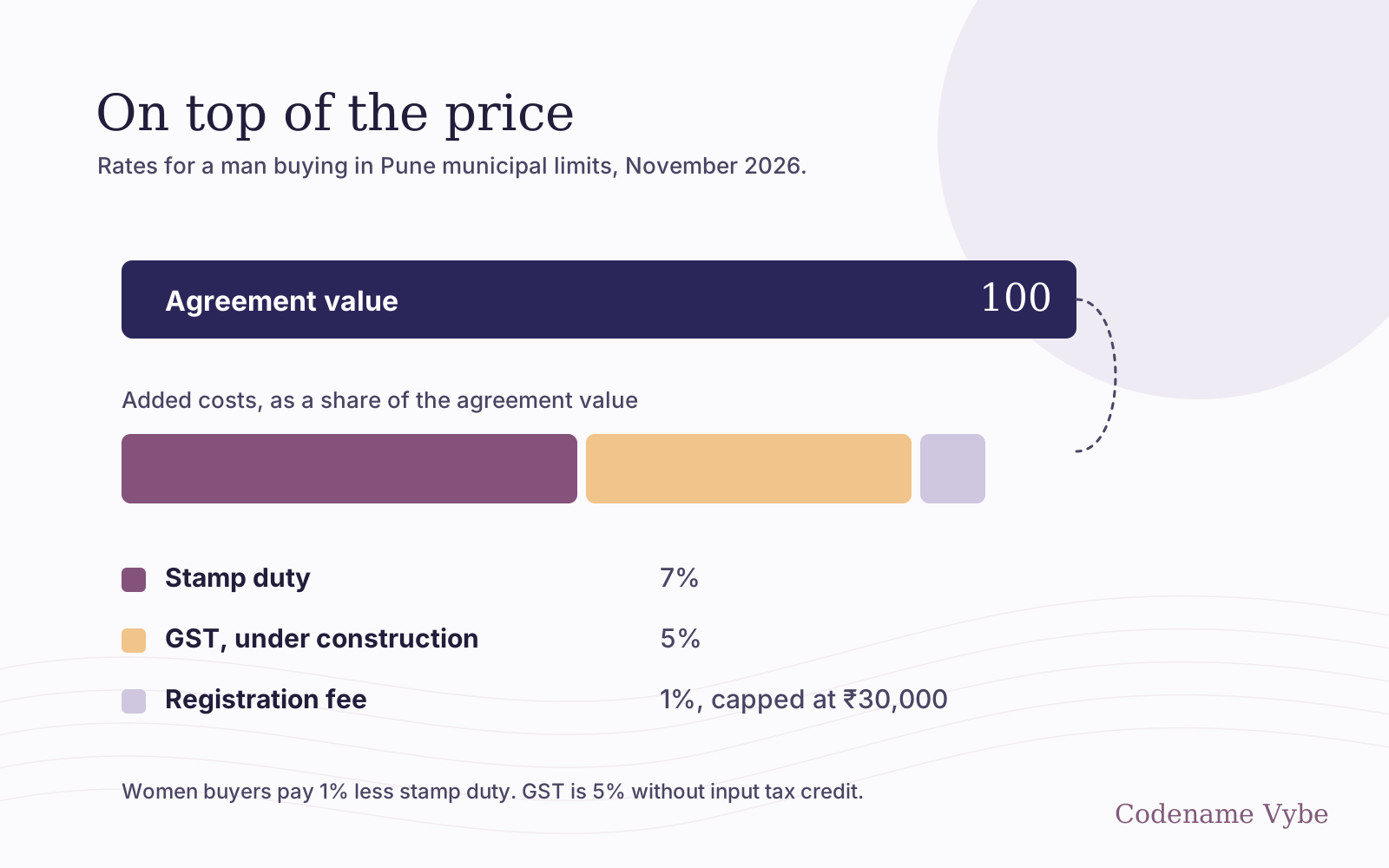
For a home within Pune’s municipal corporation limits, stamp duty for a male buyer is 7% of the property’s value, in three parts:
| Component | Rate | Source |
|---|---|---|
| Stamp duty | 5% | Article 25 of the Maharashtra Stamp Act, as set out in 2026 buyer guides from Kalpataru (updated June 2026) and Bajaj Finserv |
| Metro cess | 1% | Charged on sale documents executed from 1 April 2022 in Mumbai, Thane, Navi Mumbai, Pune and Nagpur (Free Press Journal, 24 March 2022) |
| Local body tax surcharge | 1% | The same 2026 guides; we could not find this component stated on an official IGR Maharashtra page |
| Total | 7% | 6% for a woman buyer, explained below |
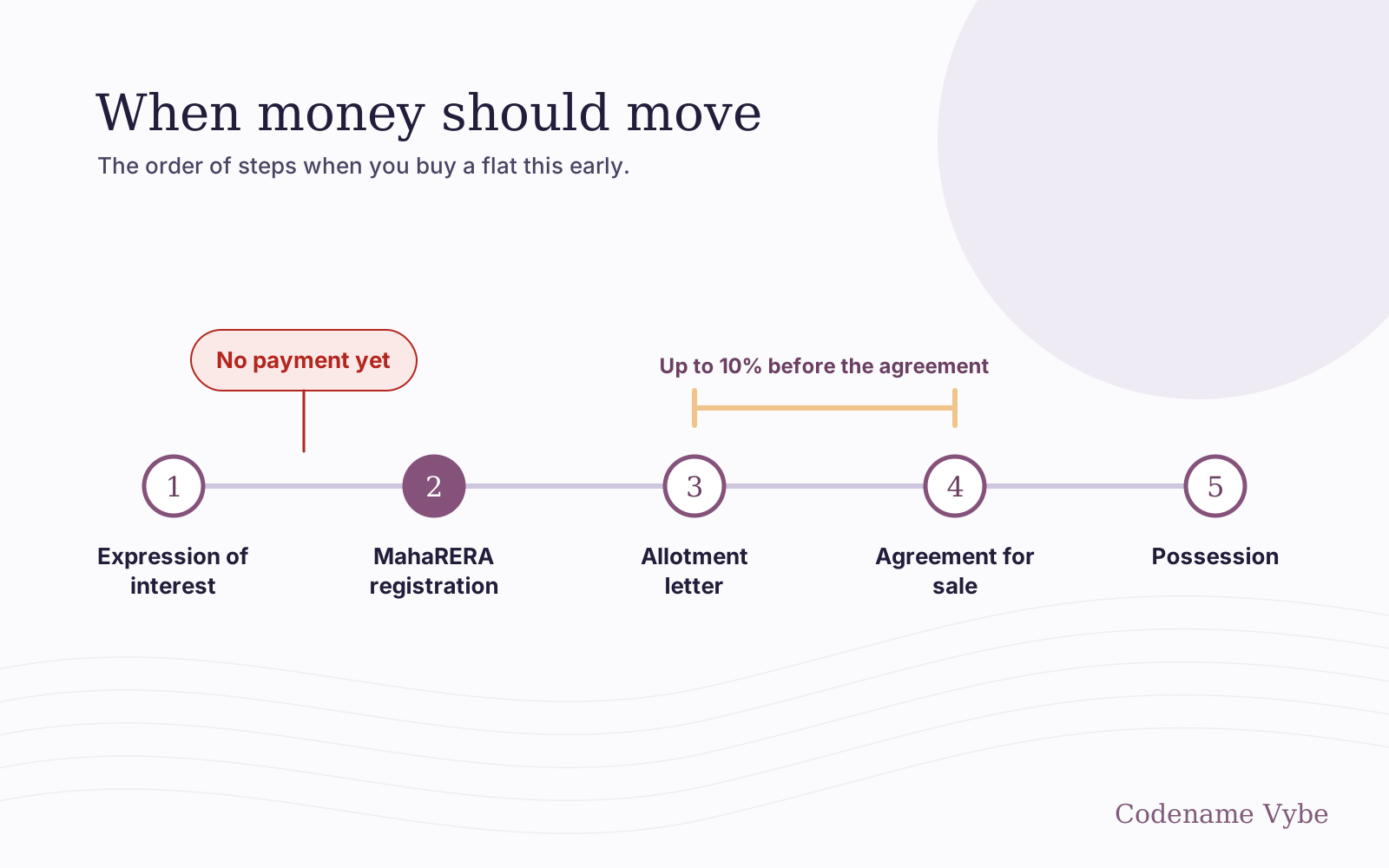
Two points on how it is charged. Stamp duty is calculated on the agreement value or the government’s ready reckoner value for the property, whichever is higher. For the year from 1 April 2026, the office of the Inspector General of Registration kept ready reckoner rates at the previous year’s level, as reported by the Free Press Journal and Construction World in April 2026. And in Maharashtra, for a flat under construction, stamp duty is paid in full when the agreement for sale is registered, not at possession. It needs to be in your budget from the start.
Confirm the applicable rate for the project’s exact survey number when your agreement is drafted.
The 1% concession for women
Since 2021, Maharashtra has given women a 1% concession on stamp duty for residential property, which brings the Pune rate to 6%. As reported by Business Today on 1 June 2023, it applies when a woman buys on her own or with a co-owner who is also a woman. When it was introduced, a woman who used it could not sell the home to a man for 15 years without repaying the concession. That condition was removed, in an announcement by Deputy Chief Minister Devendra Fadnavis reported on the same date.
What we could not verify is the rate for a woman buying jointly with a man, such as a husband and wife. Some property websites quote a blended rate of about 6.5%. The wording of the concession as reported does not support that, so do not plan around it until the sub-registrar or your lawyer confirms the rate for the exact names on your agreement.
Registration fee: 1%, capped at ₹30,000
The registration fee comes from the Table of Fees under the Registration Act, 1908, published on the IGR Maharashtra website, which we read on 5 November 2026. For a conveyance, the fee is ₹100 on the first ₹10,000 of value and ₹10 for every further ₹1,000, with the total capped at ₹30,000. In practice that is 1% of the value, and any flat valued at ₹30 lakh or more pays the ₹30,000 maximum. The sub-registrar’s office also charges a small per-page document handling fee.
GST: 5% on an under-construction flat
GST applies when you pay for a flat before the building’s completion certificate is issued. Since 1 April 2019 the rate on residential apartments has been an effective 5% of the total consideration, without input tax credit for the developer. A lower rate of 1% applies only to apartments that meet the definition of affordable housing. These rates were recommended by the GST Council at its 33rd meeting in February 2019 and are set out in the Finance Ministry’s FAQ on real estate dated 7 May 2019. We found no change to them through 2025 and 2026, including in the September 2025 GST rate revision; Bajaj Finserv’s 2026 guide also lists them as current.
The affordable test has two parts: a gross amount of not more than ₹45 lakh, and a carpet area of not more than 60 sq m in the listed metropolitan cities or 90 sq m elsewhere. Pune is not on the metropolitan list, so the 90 sq m limit applies here. The smallest home at Codename Vybe is 1,121 sq ft carpet, about 104 sq m, which is above that limit whatever the price. So the 5% rate is the one that would apply to every home on the plans.
GST is charged on each instalment as you pay it, and it is not charged on stamp duty or the registration fee. It does not apply at all where the entire price is paid after the completion certificate is issued, which is why a finished, ready home carries no GST.
Putting it together, per ₹10 lakh
Prices for Codename Vybe have not been published, so here is the arithmetic for every ₹10 lakh of agreement value, assuming the agreement value is at or above the ready reckoner value.
| Charge | Male buyer | Woman buyer |
|---|---|---|
| Stamp duty, including metro cess and surcharge | ₹70,000 | ₹60,000 |
| GST at 5% | ₹50,000 | ₹50,000 |
| Registration fee | ₹10,000, up to ₹30,000 in total | ₹10,000, up to ₹30,000 in total |
Scale these up to your agreement value, remembering that the registration fee stops at ₹30,000. These are government charges only. Legal fees, loan processing charges, maintenance deposits and society formation charges are separate and will appear on the developer’s cost sheet.
What to do with this
- Budget for stamp duty and registration at the time the agreement is registered, not at possession.
- Decide in whose names the flat will be bought before the agreement is drafted, and confirm the stamp duty rate for those exact names.
- Ask for a cost sheet that shows each charge on its own line, with GST shown separately for each instalment.
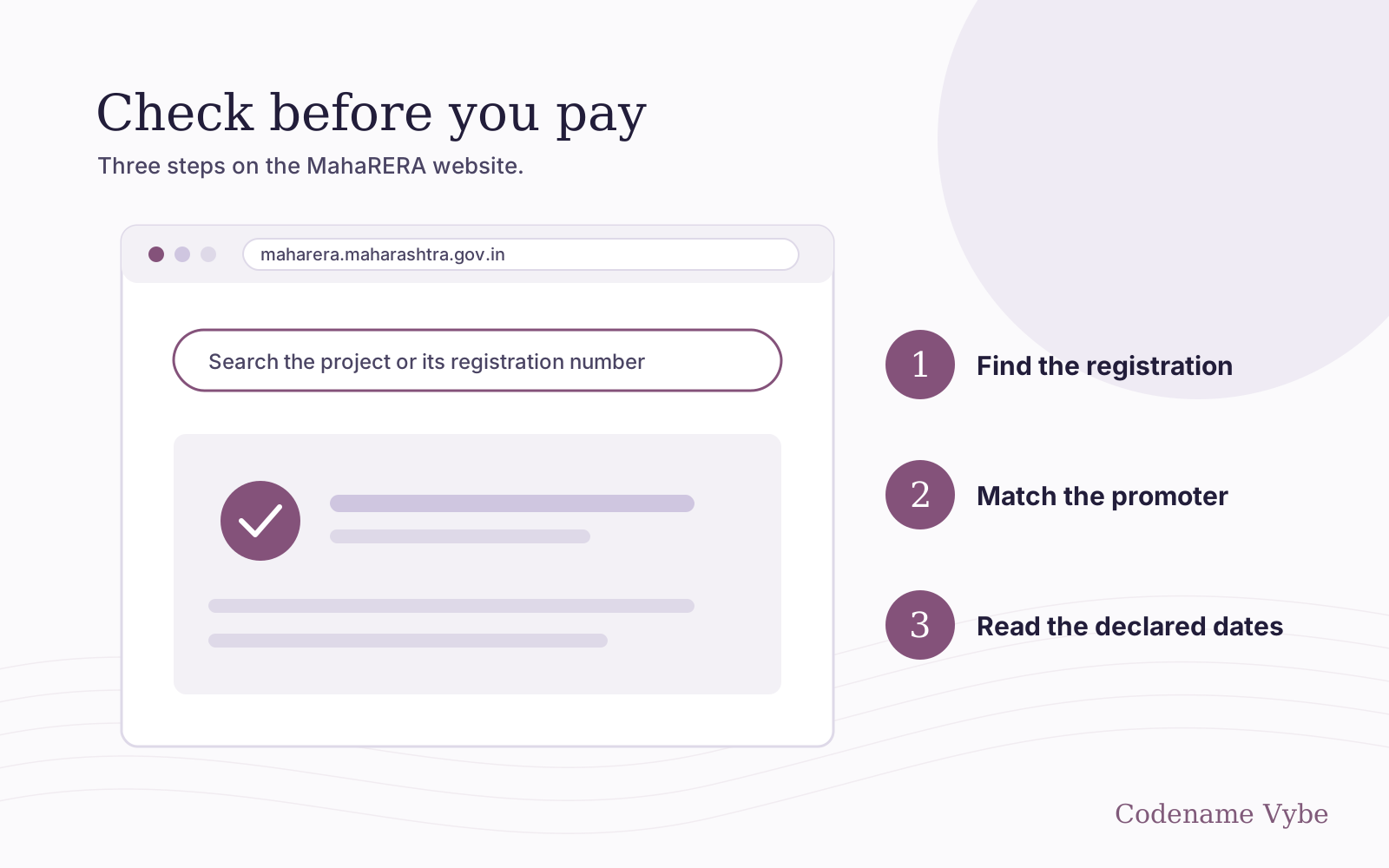
- Pay nothing until the project’s MahaRERA registration is published and checked; the guide to checking MahaRERA shows how.
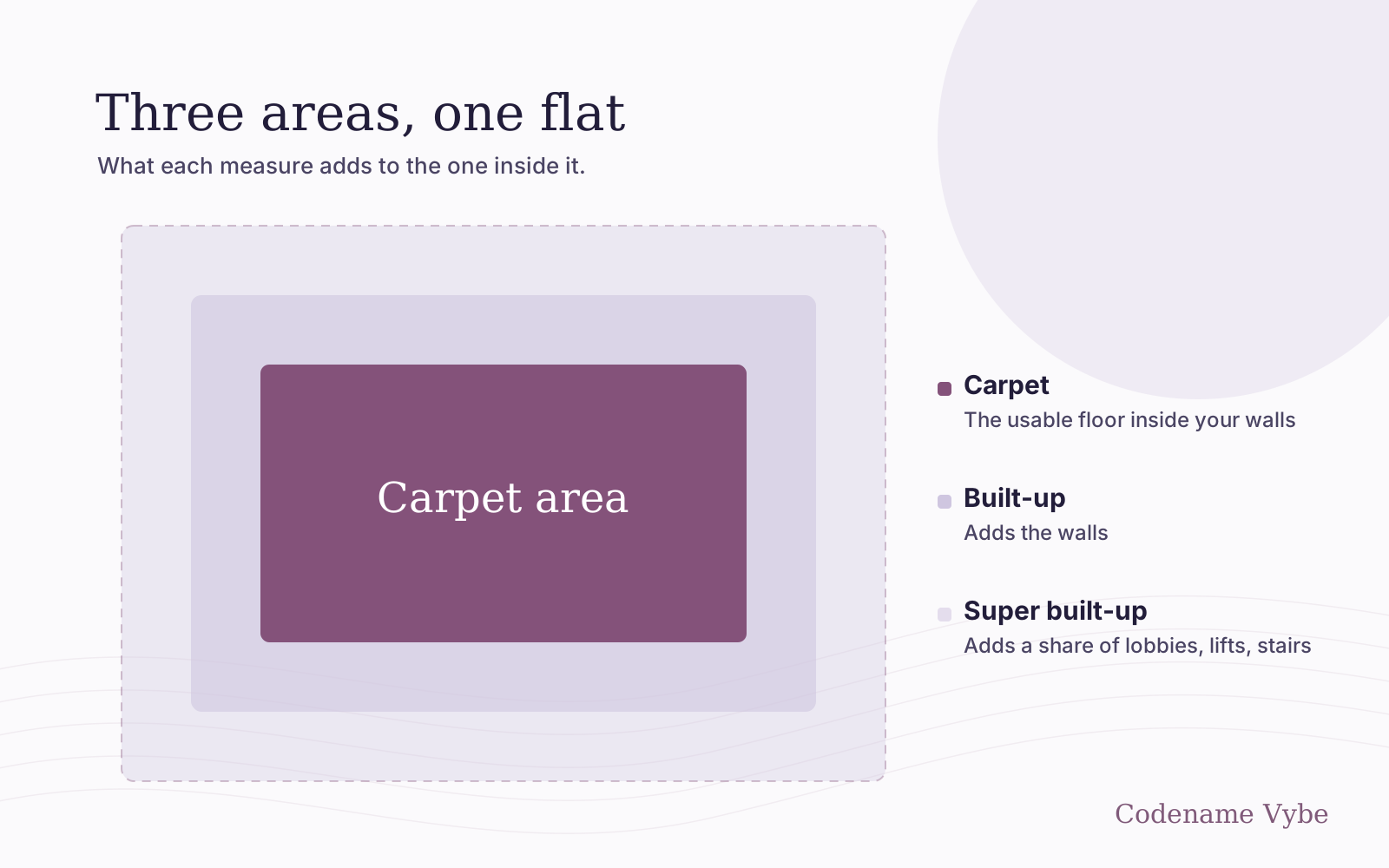
Carpet areas for every layout are on the floor plans page, and the piece on carpet area explains how they are measured. This is general information, not tax or legal advice.
When the price list is released, you can ask for it, along with a full cost sheet or a site visit, on the contact page.