A home loan for a flat that is still being built does not arrive in one payment. The lender releases it in parts as the building goes up, and what you pay each month changes as it does. This guide covers how that works, what lenders look for, and where the tax rules stand as of November 2026, under India’s new income tax law.
Codename Vybe has no published price and no MahaRERA registration number yet, so no lender can assess it today. What follows is how a loan would work once it is registered.
Sanction first, disbursement later
- Sanction is the lender’s approval of an amount, based on your income, your credit record and the property. The sanction letter sets out the amount, rate, tenure and conditions, and it expires after a set period.
- Disbursement is the actual release of money. On a flat under construction it is paid to the developer, in stages, against the developer’s demands.
How much you can borrow is capped. The Reserve Bank of India’s Master Circular on Housing Finance, dated 1 April 2025, ties the loan to the cost of the home in three bands:
| Loan amount | Largest loan, as a share of the cost |
|---|---|
| Up to ₹30 lakh | 90 per cent |
| Above ₹30 lakh, up to ₹75 lakh | 80 per cent |
| Above ₹75 lakh | 75 per cent |
Stamp duty and registration charges are left out of the cost for this purpose, except on homes costing ₹10 lakh or less. The rest, your own contribution, normally comes first: lenders usually want to see your share paid before they release theirs.
Construction-linked disbursement
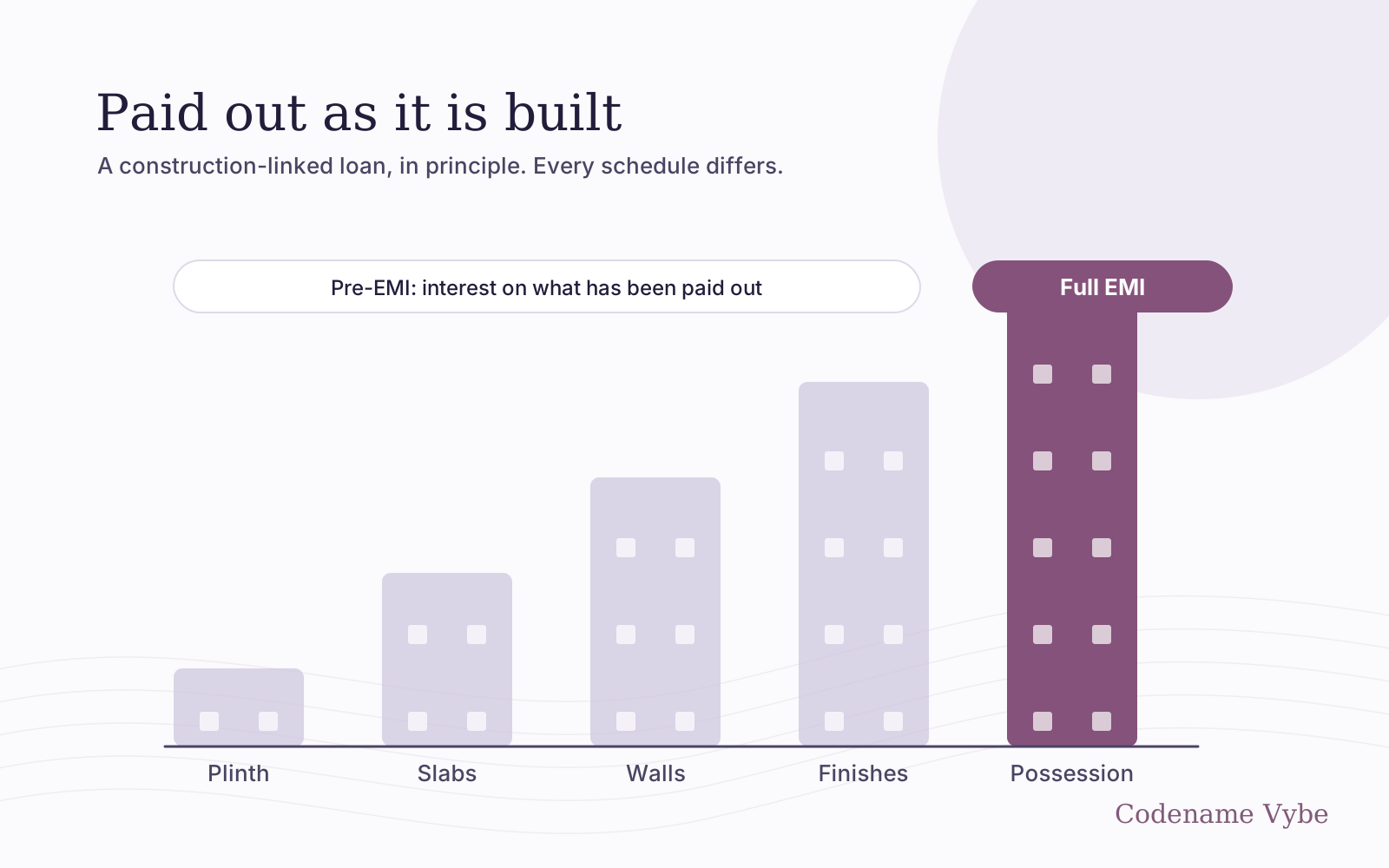
The same master circular says that disbursal of housing loans to individuals should be closely linked to the stages of construction, and that upfront disbursal should not be made for incomplete or under-construction housing projects. The rule goes back to a September 2013 RBI circular aimed at schemes in which banks paid builders the whole loan in a lump sum. In November 2025 the National Housing Bank reminded housing finance companies, on the Finance Ministry’s advice, that disbursal under subvention schemes must stay strictly tied to construction.
In practice it runs like this:
- Your registered agreement for sale ties each instalment to a stage, such as the plinth or a slab. The guide to the agreement for sale covers what else it fixes.
- When a stage is reached, the developer sends a demand letter, often with an architect’s certificate of progress.
- You pay any part that is your share and pass the demand to your lender.
- The lender checks progress, sometimes with its own site inspection, and pays the developer directly.
In a subvention scheme the developer pays your interest until possession, but the loan stays in your name: if the developer stops paying, the lender will look to you.
Pre-EMI or full EMI
Until the loan is fully disbursed, you can usually choose how to repay.
- Pre-EMI. You pay only the interest on the amount disbursed so far. The monthly outgo is lower during construction, but none of it reduces the principal, and full EMIs begin only after the last disbursement. Over the life of the loan you pay more interest.
- Full EMI from the first disbursement. Your EMI is worked out on the amount released so far and rises as more is released. Repayment of principal starts at once, and total interest is lower.
Purely to show the arithmetic, and not as a rate quoted by any lender: at 8.5 per cent a year, pre-EMI on every ₹10 lakh disbursed is about ₹7,083 a month.
One recent change helps either way. Under the RBI’s Pre-payment Charges on Loans Directions, 2025, announced in July 2025 as Business Today reported, lenders cannot charge for prepayment on floating-rate loans taken by individuals for non-business purposes and sanctioned or renewed on or after 1 January 2026. On such a loan you can pay down principal during construction without a penalty.
What lenders ask for, and why registration comes first
Lists vary, but expect to be asked for:
- Identity and address: PAN, Aadhaar and photographs.
- Income: recent salary slips, Form 16 and bank statements if salaried; income tax returns and financial statements if self-employed.
- The property: the allotment letter, the registered agreement for sale, the stamp duty and registration receipts, and receipts for what you have paid the developer.
- From the developer: a no-objection letter in the lender’s favour and, with some lenders, a tripartite agreement between you, the developer and the lender.
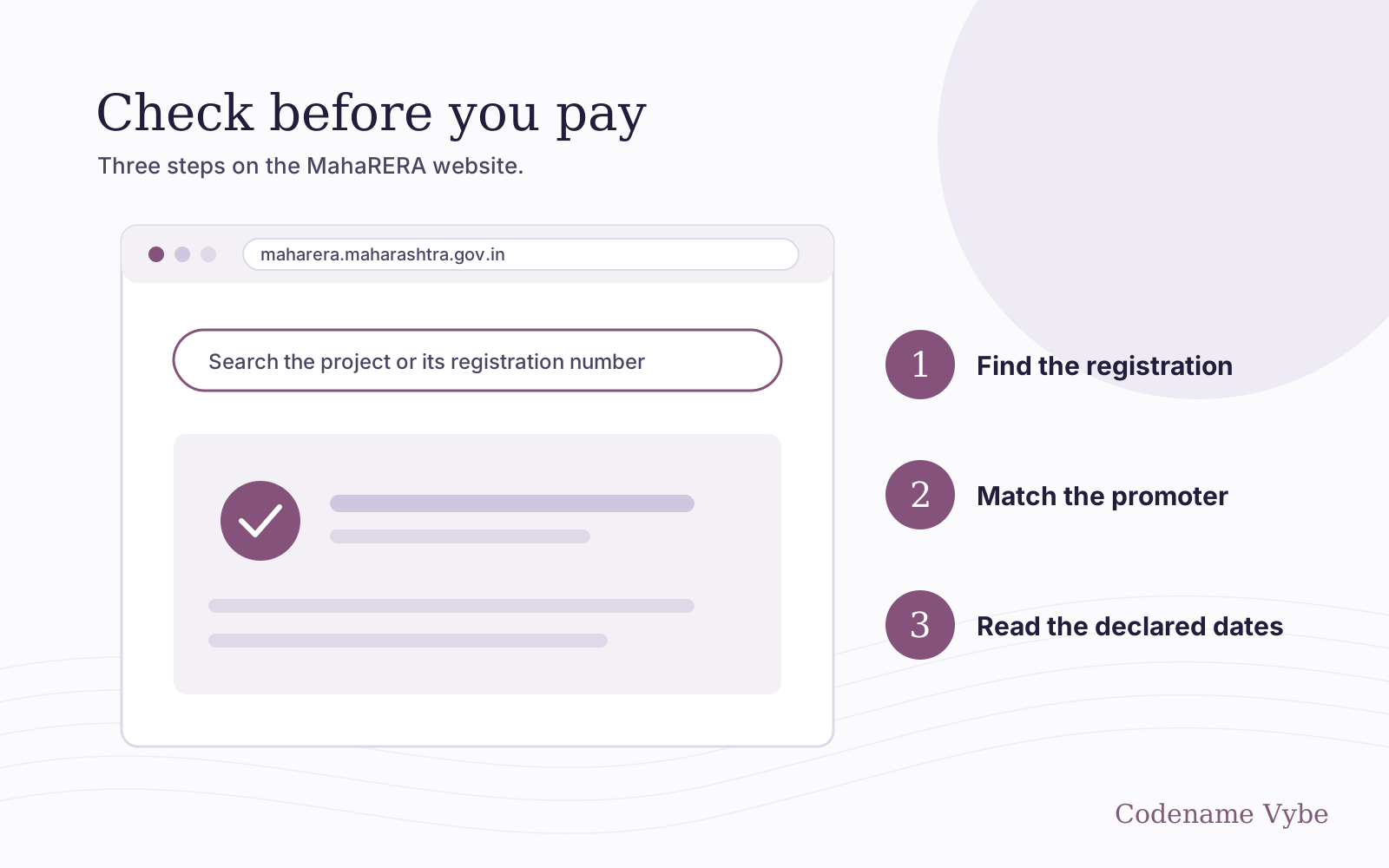
The lender also checks the project: its title, its approvals and the developer. Many lenders keep a list of projects they have already approved, so once a project is registered, ask the developer which lenders have approved it.
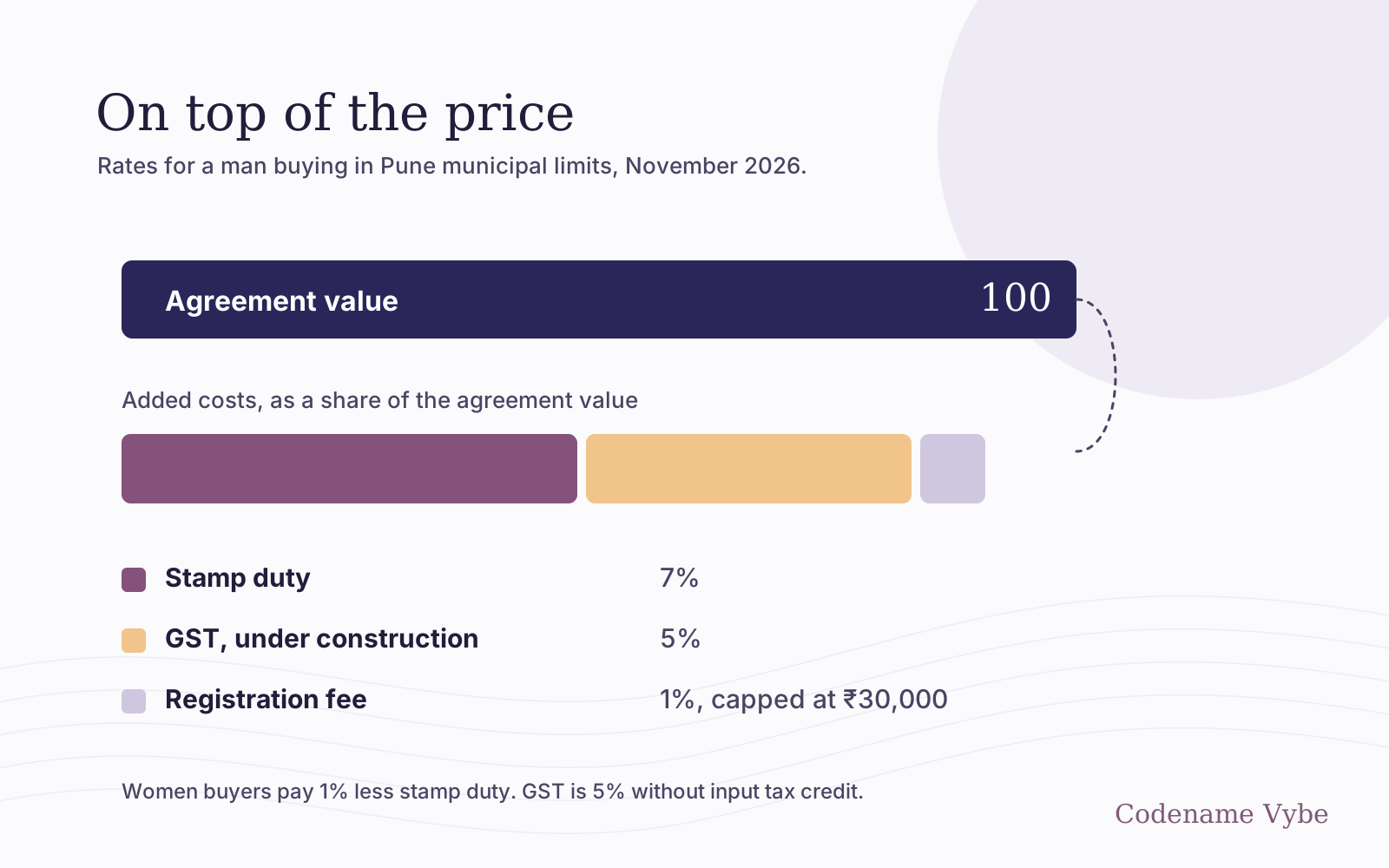
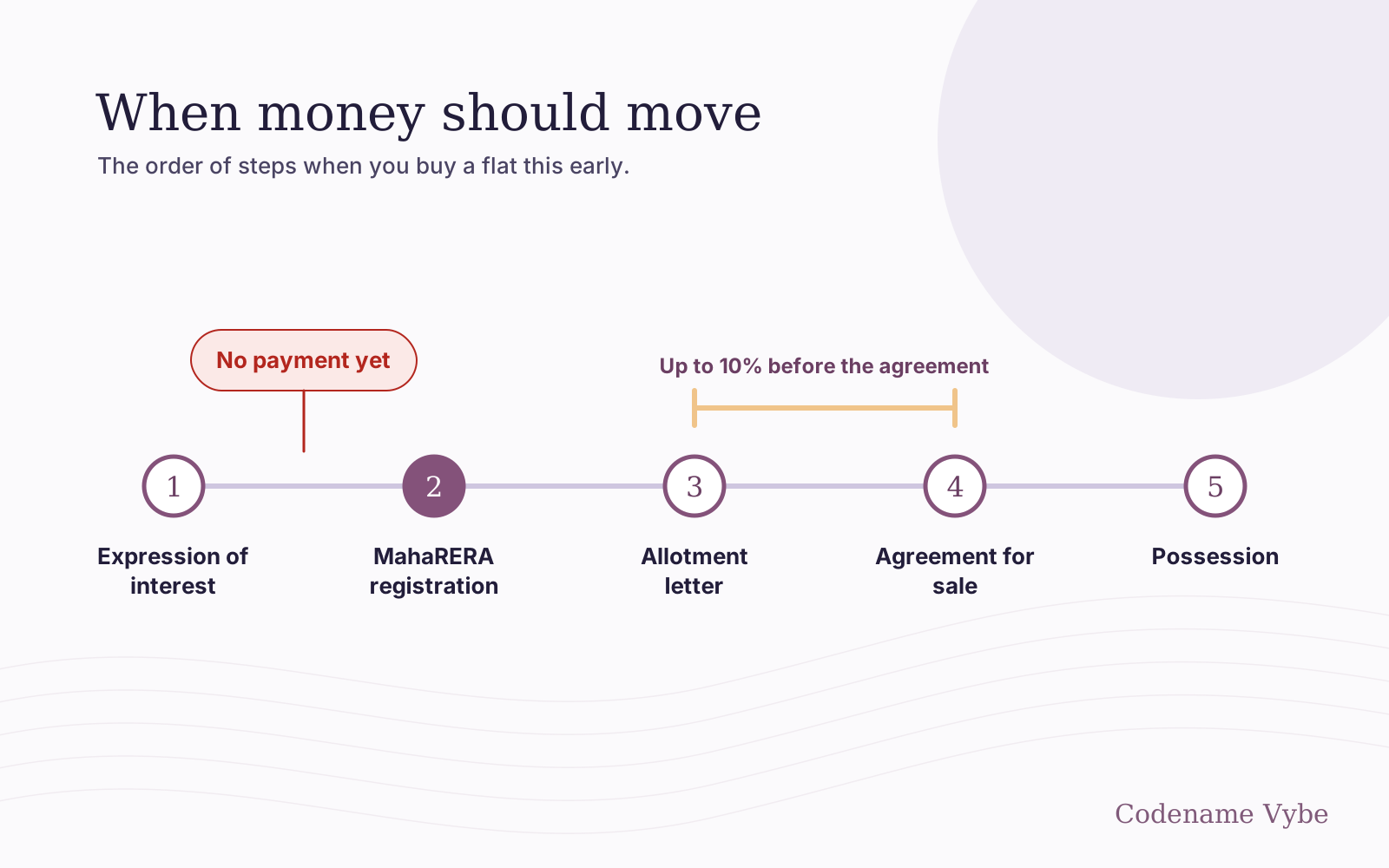
Registration comes first for a simple reason. The RBI master circular says disbursement should follow only after any required government or statutory clearances are obtained. Section 3 of the Real Estate (Regulation and Development) Act, 2016 bars booking or selling a flat in an unregistered project, and Section 13 requires a registered agreement for sale before a developer takes more than ten per cent of the price. Lenders lend against that registered agreement, so until a project is registered there is nothing to lend against. Registering it also brings stamp duty and the registration fee, covered in the piece on stamp duty, registration and GST.
Tax: what you can claim, and when
From 1 April 2026 the Income-tax Act, 2025 replaced the Income-tax Act, 1961, and the familiar section numbers changed. Interest on a home loan, deducted under Section 24(b) of the old Act, now falls under Section 22, as a TaxGuru commentary of May 2026 sets out. The deduction for principal under Section 80C moved to Section 123, read with Schedule XV, with the same ₹1.5 lakh limit, Business Today reported in March 2026.
| Deduction | 1961 Act | 2025 Act | Limit for a self-occupied home |
|---|---|---|---|
| Interest | Section 24(b) | Section 22 | ₹2 lakh a year, old regime only |
| Principal | Section 80C | Section 123 | ₹1.5 lakh a year, shared with other eligible items, old regime only |
For an under-construction flat, three rules matter most:
- Interest paid during construction is not deducted in the year you pay it. It is claimed in five equal yearly instalments from the year construction is completed, each counting within the same ₹2 lakh limit for a self-occupied home. The new Act was silent on this at first; the Budget of 1 February 2026 proposed a clarification keeping the old treatment, as CA Alley reported on 3 February 2026.
- Completion within five years. The ₹2 lakh limit applies only if the home is completed within five years from the end of the tax year in which the loan was taken. Otherwise the limit for a self-occupied home is ₹30,000, according to the May 2026 TaxGuru commentary.
- Principal counts only once the home is complete. Under the old Section 80C, principal repaid before completion did not qualify, and tax guides published in 2026 describe the same position under Section 123. We could not confirm this from the text of the new Act, so check it with your tax adviser.
The new regime, which is the default and now sits under Section 202, withdraws both deductions, Business Today reported on 1 April 2026, while confirming that the old regime remains available to those who choose it. Limits change with each Budget, so treat this as general information, not tax advice.
The homes planned so far, with their carpet areas, are on the floor plans page, and the developers’ existing projects are on the developer page.
Once the project is registered and the price list is released, you can ask for a cost sheet and payment schedule on the contact page.